
Current Legislation: 2025-2026
In South Carolina, a broad slate of anti-LGBTQ legislation has been proposed targeting LGBTQ+ people for discrimination and exclusion in a wide range of areas, from education to marriage to public spaces. Here are the bills that we are tracking.
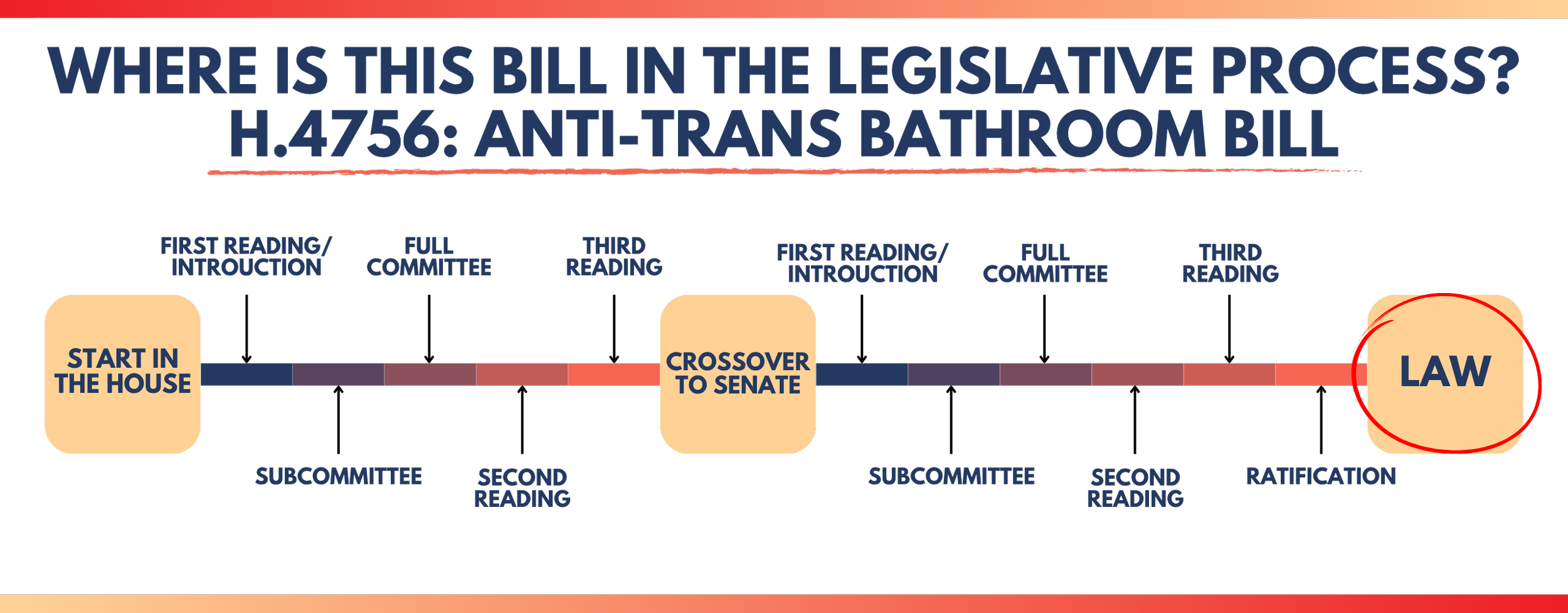
Governor McMaster has signed H.4756, the anti-trans bill, into South Carolina law. We know how difficult this news is to hear, and it is normal to feel panic, anxiety, and anger. However, it is important that we understand the exact parameters of this bill. To be clear, this law DOES NOT apply to ALL restrooms and changing facilities in the state.
This law only applies to public K-12 schools and public colleges/universities in South Carolina. It mandates:
The use of multi-occupancy restrooms, locker rooms, showers, and changing facilities are determined only by a person’s “biological sex at birth.”
Sex is defined strictly as male or female, based on reproductive anatomy at birth, explicitly excluding transgender and nonbinary identities.
Public schools and colleges are to enforce bathroom, changing room, and housing access based on sex assigned at birth, not gender identity.
These rules apply to overnight trips, school events, and campus housing, including sleeping quarters.
Individuals can sue schools or colleges if they encounter someone they believe to be “of the opposite sex” in a restroom or changing facility.
Financial penalties: schools or colleges that don’t comply could lose 25% of certain state funds.
What is a Resolution?
A state government resolution is a formal, non-binding expression of opinion, intent, or sentiment passed by a legislative body (like the state Senate or House). Unlike laws, most resolutions do not require the governor's signature and deal with internal operations, ceremonial recognitions, or expressing the legislature's stance on external issues. This is not the same as a bill that becomes law/influences policy.
Ultimately, a resolution is a fancy way to say “We have an opinion, and want you to know about it.”
Does H.5501 do anything?
South Carolina still has a constitutional amendment banning same-sex marriage - one that would take effect if federal protections were ever overturned. It’s scary to see legislators discuss removing these rights from LGBTQ+ South Carolinians. While a resolution does not change law, it does tell us what priorities lawmakers have.
Right now, there is no action needed for H.5501 besides supporting LGBTQ+ organizations in your community
S.162 is an extremely dangerous bill that would amend the SC code to be unnecessarily restrictive on situations that would allow a gender marker on South Carolina birth certificates to be changed, effectively making it impossible for trans individuals to change their gender to reflect reality.
S.162 would cause irreparable harm to trans and intersex South Carolinians by only allowing a gender marker change in two specific instances: 1) a clerical error and 2) within the first 12 months after birth if an error was made for an intersex infant.
Mismatched documents increase the risk of harassment, discrimination, and violence, especially when applying for jobs, housing, education, or government services.
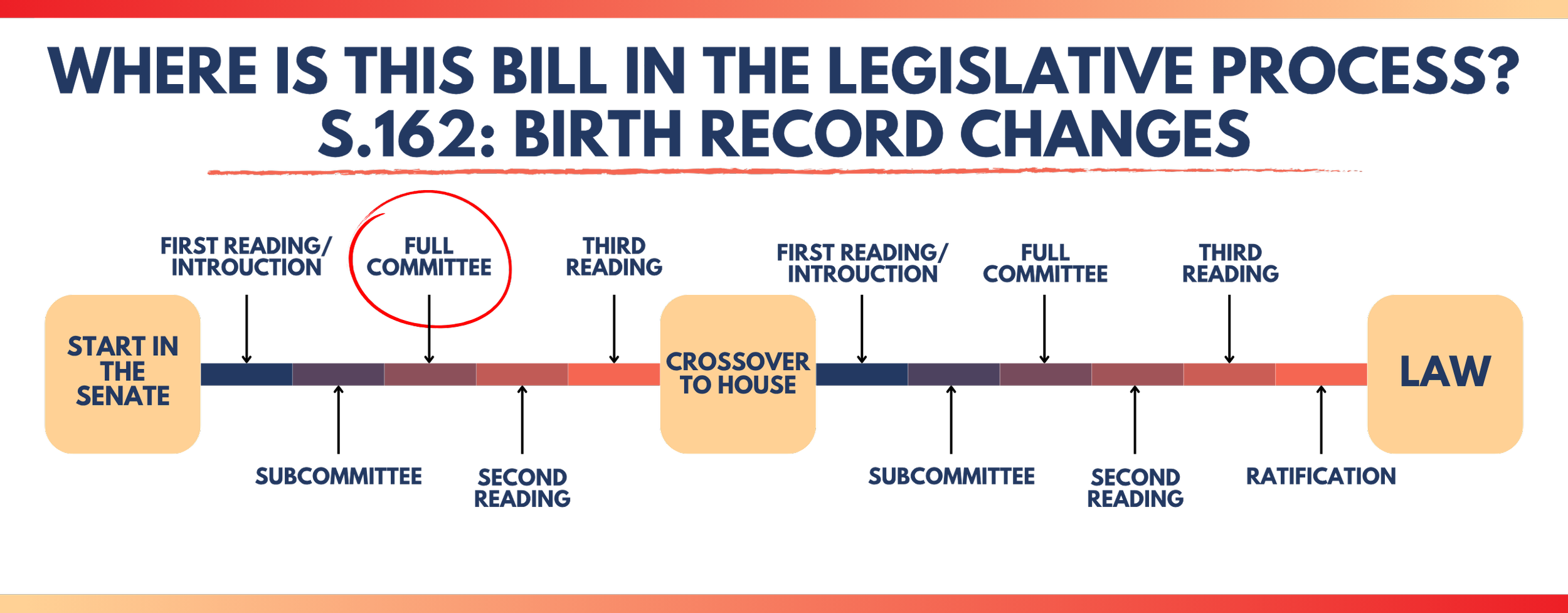
Currently, S.162 is still in the Senate’s Medical Affairs Committee. It has not been placed back on the agenda since it’s committee meeting on February 12th.
For the most up-to-date information on this bill, sign up for our email list and follow us on social media.
This bill amends multiple sections of South Carolina law to:
Redefine child abuse/neglect protections so that:
Raising a child “consistent with the child’s sex” cannot be considered abuse or harm.
Seeking mental health care to help a child live consistent with their sex is protected.
Refusing gender transition-related physical or mental health care is protected.
Restrict courts in custody decisions from considering these actions as contrary to a child’s best interests.
Expand protections for religious adoption and foster agencies and parents, preventing the state from taking action against them if they decline services based on “sincerely held religious belief,” including policies related to sex and gender.
The repeated phrase “consistent with the child’s sex” is the core mechanism of the bill.
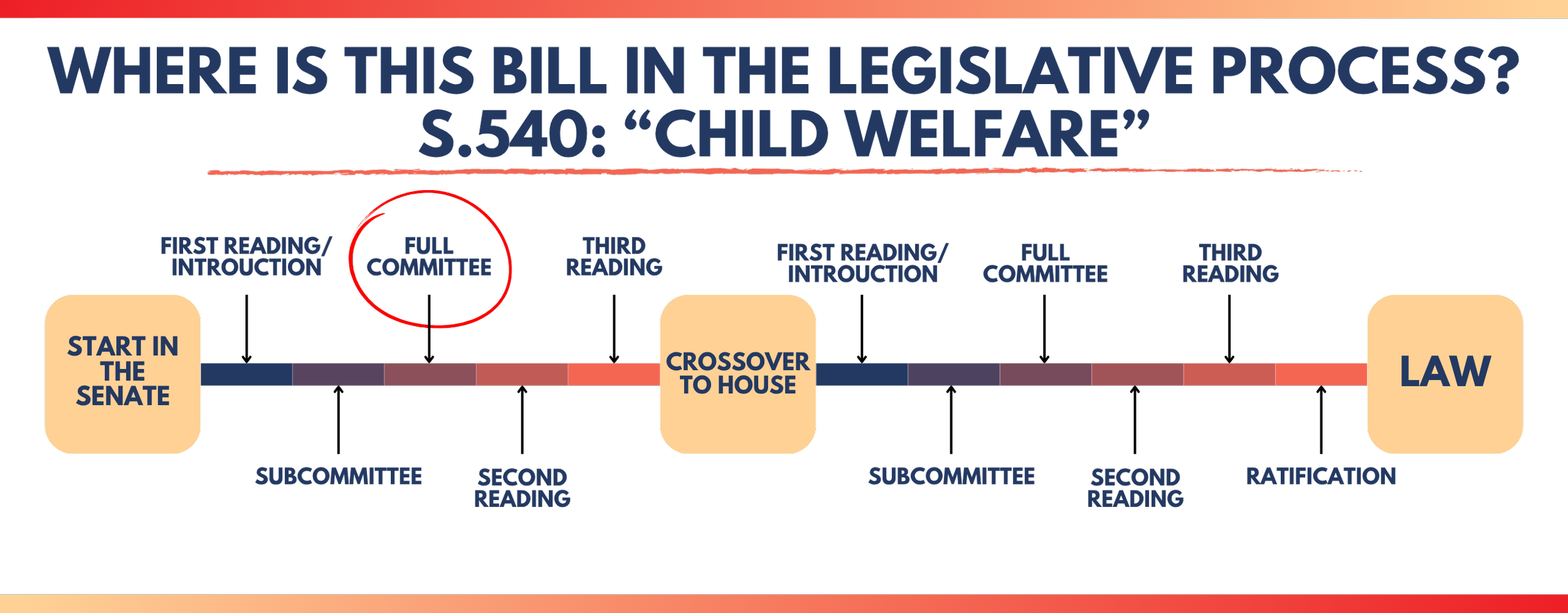
Currently, S.540 is still in the Senate’s Family and Veterans’ Services Committee. It has not been placed back on the agenda since it’s committee meeting on March 4th.
For the most up-to-date information on this bill, sign up for our email list and follow us on social media.
H.4757 attacks ALL student privacy and safety, especially LGBTQ+ youth, in four ways:
H. 4757 prohibits school staff from withholding information from parents related to a student’s emotional or mental health, and explicitly targets transgender and nonbinary youth by stating “any request by a child to be treated in a manner that is inconsistent with his or her sex”. Even without direct disclosure, parents and adults of youth would have broad access to school records including counseling records.
H. 4757 encourages over-censorship by schools in an effort to avoid complaints or lawsuits by parents who don’t want their child to have inclusive education. Bill language includes requiring advance notice and explicit parental consent before implementing lesson plans that “has the goal or purpose of studying, exploring, or informing students about gender roles or stereotypes, gender identity, gender expression, or sexual orientation.”
H. 4757 would pressure schools into a position to determine the existence of inclusive social support groups and clubs like the Gay-Straight Alliances. These groups already have preexisting norms to protect members, however, this bill would force them to give up the identity of their members.
H. 4757 eliminates minor consent for most healthcare services by increasing the medical age of consent from 16 to 18 years of age, making it difficult for young people to seek confidential services such as pregnancy counseling, abortion referrals, STI testing and treatment, contraception and care after sexual assault. By centering parental consent, minors may delay care out of fear.
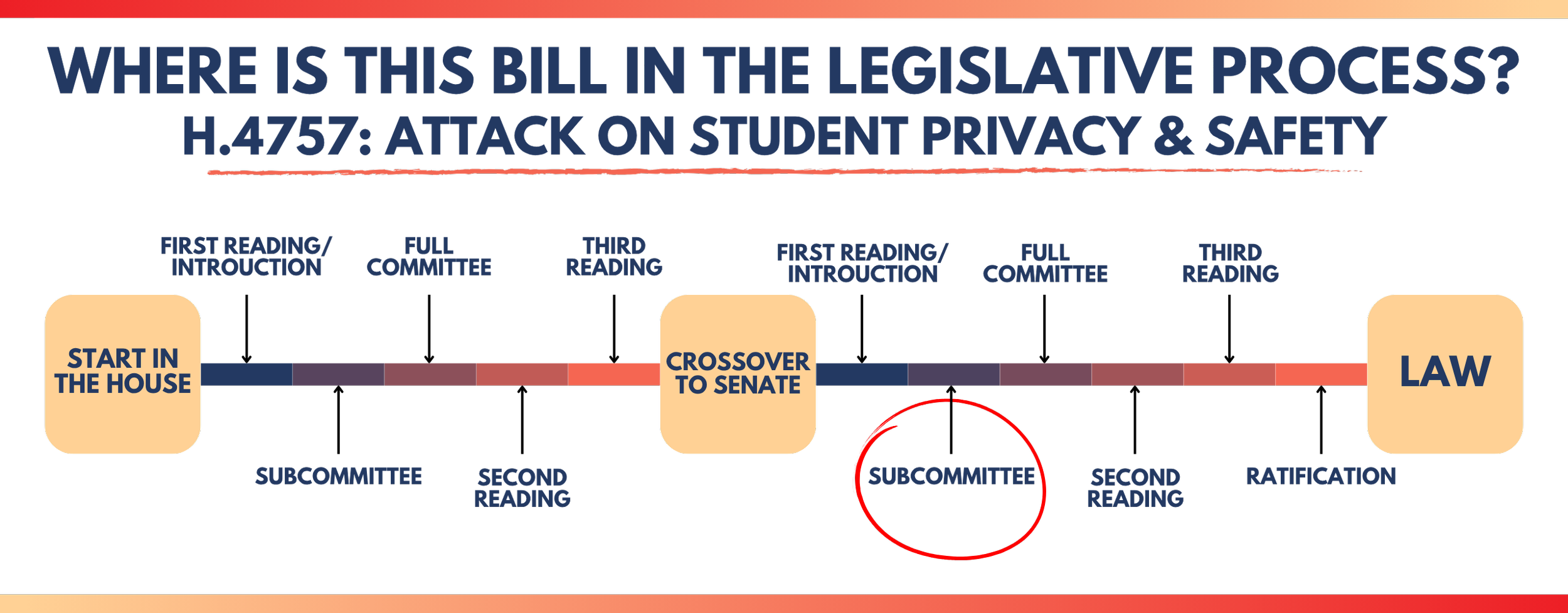
Currently, H.4757 is still in the Senate’s Education Committee. It has not been placed on the agenda since being referred to this committee on February 24th.
For the most up-to-date information on this bill, sign up for our email list and follow us on social media.